
Thursday, 13 February 2014

Saturday, 23 November 2013
Take a virtual tour of the Sun

The Sun is a main sequence star, meaning that it is ‘middle aged’ at 4.6 billion years old. It has a surface temperature of approximately 5778 K (5505°C) and has a diameter of about 1,392,684 km. The Sun transforms 620 million metric tons of hydrogen into helium each second; once this supply has run out in about 5 billion years’ time, the Sun will expand into a red giant and then die, leaving behind its core and a planetary nebula. Once the planetary nebula has dispersed into space, a white dwarf will be left behind, which will also someday cool and die.
One method scientists use to study the interior of the Sun is helioseismology. This involves studying the propagation of the waves in its body, similar to how geologists learn about the interior of the Earth by monitoring seismic waves emitted by earthquakes. The waves in the Sun's body cause small oscillations of the surface that are observable.
There are three layers separating the surface of the Sun from its core. The inside layers of the Sun are the photosphere, the convective zone and the radiative zone. The photosphere is comprised of hydrogen at 5500°C, and is where sunspots occur. The convective zone contains currents which take heat to the photosphere, which is around 140,000 km thick. The energy from the core, which is where hydrogen is transformed into helium, goes through the radiative zone, about 380,000 km thick.
The solar atmosphere refers to the parts of the Sun above the photosphere. There are five principal zones of the Sun’s atmosphere: the temperature minimum; the chromosphere; the transition region; the corona; and the heliosphere. The heliosphere extends past the orbit of Pluto to the heliopause; here it forms a shock front boundary with the interstellar medium. The chromosphere, transition region, and corona are all much hotter than the surface of the Sun. Solar flares occur in the chromosphere.
NASA have developed a virtual tour of the Sun. You can click on features on the Sun to learn more about: sunspots; the Sun’s structure; the photosphere; solar active region; the corona; and the future of the Sun. you can also learn more about the current solar missions, ACRIMSAT and SORCE. There is also a video on the Sun’s role in climate change and some quick facts.
Sources:
http://solarsystem.nasa.gov/planets/profile.cfm?Display=Facts&Object=Sun
http://csep10.phys.utk.edu/astr162/lect/sun/interior.html
http://www.thegalaxyguide.com/galaxy/sun/index.html
One method scientists use to study the interior of the Sun is helioseismology. This involves studying the propagation of the waves in its body, similar to how geologists learn about the interior of the Earth by monitoring seismic waves emitted by earthquakes. The waves in the Sun's body cause small oscillations of the surface that are observable.
There are three layers separating the surface of the Sun from its core. The inside layers of the Sun are the photosphere, the convective zone and the radiative zone. The photosphere is comprised of hydrogen at 5500°C, and is where sunspots occur. The convective zone contains currents which take heat to the photosphere, which is around 140,000 km thick. The energy from the core, which is where hydrogen is transformed into helium, goes through the radiative zone, about 380,000 km thick.
The solar atmosphere refers to the parts of the Sun above the photosphere. There are five principal zones of the Sun’s atmosphere: the temperature minimum; the chromosphere; the transition region; the corona; and the heliosphere. The heliosphere extends past the orbit of Pluto to the heliopause; here it forms a shock front boundary with the interstellar medium. The chromosphere, transition region, and corona are all much hotter than the surface of the Sun. Solar flares occur in the chromosphere.
NASA have developed a virtual tour of the Sun. You can click on features on the Sun to learn more about: sunspots; the Sun’s structure; the photosphere; solar active region; the corona; and the future of the Sun. you can also learn more about the current solar missions, ACRIMSAT and SORCE. There is also a video on the Sun’s role in climate change and some quick facts.
Sources:
http://solarsystem.nasa.gov/planets/profile.cfm?Display=Facts&Object=Sun
http://csep10.phys.utk.edu/astr162/lect/sun/interior.html
http://www.thegalaxyguide.com/galaxy/sun/index.html
Sunday, 17 November 2013
Radio-Invention History & The Story of Fight for Patents
Radio – Invention History
The invention history of the radio is not only interesting but rather long as well. If you ask who invented the radio, probably you will get the name Marconi. But, was it really Marconi who invented the radio? Well, you have to determine for yourself after going through the journey of the invention history of the radio.
There are a lot of knots to be untangled if you want to arrive at an answer as to who invented the radio. Was the inventor of radio the person who discovered that electromagnetic waves can be sent through air? Was it the person who sent signals to the farthest distance? Was it the person who sent the first signals with voice? Well, the answers are in fact not easy.
Wireless itself is relatively a broad concept. Within the wireless category itself, there are many subcategories of which radio broadcasting is just one; the others include wireless telegraph, wireless ship-to-shore communication, and the like. To know the development of wireless, it is crucial to first track the events that led to the discovery of electricity. Though there is early documentation, it was in 1600 that electricity as a science had its beginning. It began when Dr. William Gilbert, Queen Elizabeth’s personal physician invented the electroscope which could detect electromagnetic energy in the human body. Gilbert coined the word ‘electricity.’ From there, a lot of researchers and scientists had their hand in the development of this wonderful field of science. Sir Thomas Browne, Alessandro Volta, Benjamin Franklin, and Georg Simon Ohm were a few among the many who made several contributions to the science of electricity.
Radio is, in fact, indebted to other major discoveries for its birth: the telephone and the telegraph. Perhaps, these three technologies are very closely related. Radio first started as wireless telegraphy. And, the credit certainly goes to the invention of the radio waves which was found to be capable of sending out music, speech, picture and various other data through air.
Exploring Wireless
The true interest in wireless began with the invention of the telegraph in 1837 by Samuel F. Morse in 1937; the telegraph required wires which was a bit expensive proposition during those times. In the 1860s, James Clerk Maxwell, a Scottish mathematician and physicist, was the first to forecast the presence of radio waves; however, he was not able to prove his theory. Following him, several researchers tried various means to showcase the presence of the radio waves. But, the real experiments that led to the discovery of the Radio started with Heinrich Hertz in 1887. A few call him the father of Radio because it is known that his experiments instilled interest in Marconi. In those days, Radio waves were called Hertzian waves. Hertz showed the projection of swift variation of the electric current into space in the form of radio waves. Hertz then measured the velocity of the waves and found they were the same as light, 186,000 miles per second.
Tesla and Marconi
When the world was heading towards the 20th century, inventors all over were trying on new and exciting inventions. A lot of scientific work in radio technology was heating up as well. In the race to invent the radio, two men, a Serbian-American scientist Nikola Tesla and an Italian physicist Guglielmo Marconi went head to head. However, even today or a hundred years later, ask any two people about who invented the radio and I bet you – you will probably get two different answers. The story is perhaps a foggy one that is a mixture of scientific discovery with lawsuits and some old-fashioned marketing.
Tesla’s Part
- Nikola Tesla – Founder of Tesla Coil
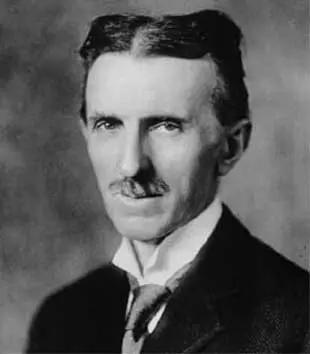
Tesla invented the induction coil or the Tesla coil after he came to the US in the year 1884. A Tesla coil is a device required to send and receive radio waves (it is said that Marconi relied on this coil for his experiments). In about 1895, unfortunately, Tesla’s laboratory was completely destroyed by fire when he was preparing to send a radio signal about 50 miles to the West Point, New York.
Marconi’s Research and Invention
- Guglielmo Marconi – Wireless Telegraph
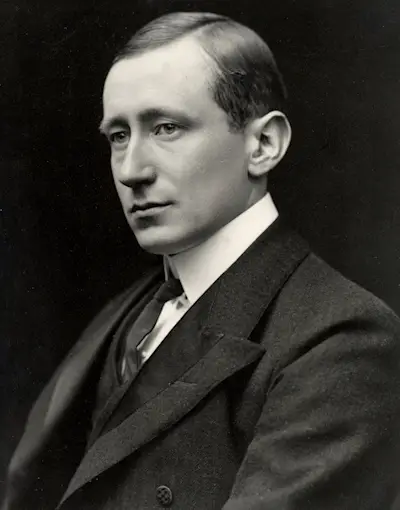
Twenty years after the telephone was invented, music was set down on telephone line and Marconi was the one responsible for the radio signals. The Italian discoverer showcased radio communication’s feasibility. He was fascinated by Hertz’s discovery of the radio waves that he realized it could be employed for receiving and sending telegraph messages; he referred to it as wireless telegraphs. Marconi’s earliest radio transmissions transmitted coded signals to only a mile far in the year 1896. Later Marconi recognized the huge potential of these waves and offered the discovery to the Italian government. Unluckily, the government turned it down. Marconi then realized a patent and started experimenting further after he moved to England. In 1896, Marconi sent and received Morse code-based radio signals at distances spanning approximately four miles. The same year, he applied for and was granted the world’s first patent in wireless telegraphy. It was in England that he received the first patent. In 1898, he made the first ever public broadcast of a sports event – he flashed the results of Kingstown Regatta to Dublin Newspaper office.
The Fight for Patents
Tesla applied for his first patents for his radio work in 1897 in the US. He also constructed and demonstrated a radio-controlled boat at the Madison Square Garden in the year 1898. And, this was where things started getting sticky.
In 1900, the US Patent Office granted Tesla with patents for the fundamental design of the Tesla coil. The radio patents offered to Tesla gave him the ownership over one of the major necessities in radio communications. Towards the end of the same year, Marconi filed a patent for tuned telegraphy. The patent office first denied Marconi’s applications saying that his work relied on the use of Tesla coils. Not getting discouraged, Marconi made use of his father’s contacts and wealth to lead a lucrative business based on his telegraph technology; meanwhile, he continued to pursue his radio patents. In the year 1901, he transmitted the first transatlantic telegraph. Marconi continuously applied for the patent for three years while he also gained financial support from company investors like Thomas Edison and Andrew Carnegie. Finally, in 1904, the US Patent Office strangely reversed its earlier decision and gave Marconi the patent for the invention of the radio. Marconi also won the Nobel Prize for physics in 1909. This further fueled the rivalry with Tesla.
After a lot of lawsuits, the US Supreme Court restored Tesla (who had died a few months earlier) as the inventor of radio!! However, many people still believe that Marconi is the father of the radio.
Another claim by JC Bose
- J C Bose
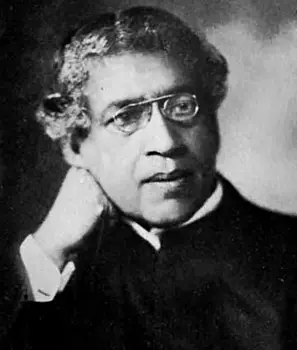
JC Bose of India was another claimant to the throne of radio inventors. In 1896, he demonstrated radio transmission to the British Governor General at Calcutta in India. The transmission covered a distance of around 3 miles. The instrument he used, the Mercury Coherer attached to a telephone detector, is still displayed at the Calcutta University’s Science College. Bose had overcome Hertz’s problem of waves not being able to penetrate through mountains, walls or water. Marconi’s Coherer and Bose’s Coherer were exactly the same. Bose was hesitant about applying for a patent because he was a firm believer of free flow of inventions in the field of science. However, due to the persuasion of his American friends, he had applied for a patent in 1901. In the year 1904, the US patent was granted to him.
Nathan Stubblefield – A Significant Personality
- Nathan Stubblefield
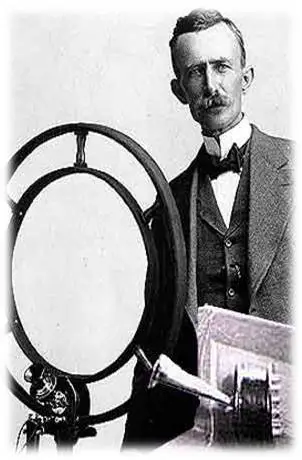
Even before Tesla and Marconi made their way towards the Radio, Nathan Stubblefield, a Kentucky farmer and inventor, demonstrated wireless technology in public in the year 1892. He was able to broadcast signals as well as voice and music!! In 1898, again he demonstrated wireless to a documented distance of about 500 yards. Later in 1902, he showcased a ship-to-shore broadcast on the river Potomac in Washington DC; for this, he received a patent for wireless telephone in 1908. Stubblefield was actually afraid that someone would steal his idea and invention that he tried every possible means to shelter it from everyone. Once he was offered $500,000 for this invention but he refused as thought his invention deserved more. He envisioned the device in motorcars. Following a demonstration in Washington in 1912, his whole device was stolen. He firmly believed that his invention was copied. Sadly, Stubblefield died of starvation after going into seclusion because of his failed attempts for acceptance of his invention.
Now, who is the actual inventor of the Radio?
Well informed professionals still feel that the whole credit of the invention of the radio should go to Stubblefield. If you visit the Town Square in Murray, Kentucky, you can find a statue of Stubblefield with an inscription “Murray, Kentucky, Birthplace of Radio.” Now, who is the inventor of Radio? The US Supreme Court ruled that Tesla is the father of Radio and Marconi is not. The question still remains whether the honor should really go to Stubblefield or rather Bose.
Evolution of the Radio
Radio has evolved tremendously over the years. Earlier, transmitters were called spark gap machines. They were mainly established for ship-to-ship and ship-to-shore communication. Those days, communication was limited to two points and did not involve public broadcasting as it is today. In case of sea disasters, wireless signals displayed effective communication for rescue operations. A range of ocean liners started installing the wireless equipments and in 1899, the US Army set up the wireless communication. Two years later, the Navy adopted the wireless system; it was a great relief because until then, Navy was using homing pigeons and visual signaling for communication.
In 1901, radiotelegraph services were established in the Hawaiian Islands. Marconi station located in the Massachusetts carried greetings between Theodore Roosevelt and King Edward VII. In the year 1905, Port Arthur’s naval battle was reported of using wireless communication and the US weather department used radiotelegraphy.
Sooner, radio transmitters were improved a lot. Overseas radiotelegraph services slowly started developing. Lee Deforest, the inventor of space telegraphy, Audion, and triode amplifier, took care of the developments in many technical issues. Deforest also discovered the detector. In fact, he was the first person to use the term ‘radio.’ His work resulted in the discovery of AM radio that was capable of broadcasting several radio stations which the earlier gap transmitters did not allow.
Ever since that time, there has been no looking back. The radio has now become a popular medium of handy entertainment. With the technological advancements in the 21st century, the Internet radio is also introduced. Satellite radio is another recent development in the field. Using this, one can listen to several international radio stations without any issues. In addition to all these latest editions, Ham radio is the next big thing. No wonder radio lovers have a reason to celebrate as there is perhaps a lot in store for them!!
Saturday, 16 November 2013
The Story Behind the Invention of Electromagnetism
Electromagnetism
Once, a naughty child took a little chalk to his teacher. He asked what it was made of. The teacher answered that it was made of atoms. Then, the teacher continued that the atoms were made of electrons, protons and neutrons. The child interrupted and questioned if the chalk is really made of atoms and the rest of the jargon words, why the atoms are not separated and how they are united. The teacher threw a gentle smile and explained that like the joints in his body connected his bones, there were invisible joints in the atoms that keep the atoms close together and the phenomenon is known as electromagnetism.
So, have you ever had the same doubt as the little kid? Well, it is always interesting to know about the facts of magnets and electrons and collectively as electromagnets. This write up will help you in knowing more about the invention story, the failures and successes over various experiments that were performed on electromagnetism.
What does Electromagnetism Really Mean?
Like the gravitational force, strong force and the weak force, electromagnetic force is also one of the four fundamental forces of nature. The electrons inside an atom rotate around the nucleus in a particular track called the orbital. Due to the interactive force between the electrons of the same atom and the electrons of the neighboring atom, and because of the momentum, the atoms are held together. The interactive force between the particles of an object or atom is due to the electromagnetic force which also involves the charges.
People Involved in the Invention of Electromagnetism
Most of the leading physicians worked on the property of electromagnetism including Andre Marie Ampere, Hans Christian Oersted , Edmond Halley, James Clerk Maxwell, William Gilbert, Ben Franklin, Charles Austin de coulomb, Luigi Galvani, Alessandro Volta, Michael Faraday, and Heinrich Hertz
The First Spark
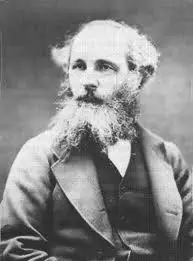
James Clerk Maxwell
Until 1873, electricity and magnetism were discussed as two different properties. They were not seen under a single aspect unless guided by James Clerk Maxwell. In his publication, Treatise, he made a hypothesis that the interaction between the positive and the negative charges were aided by a force.
In earlier days, iron magnets and lodestones were the only known magnets and people believed that the earth had tons of magnets at its core.
When scientists observed the changes in the direction of a magnetic compass, they believed that the earth’s magnetic field kept changing. In that period of time, a scientist,
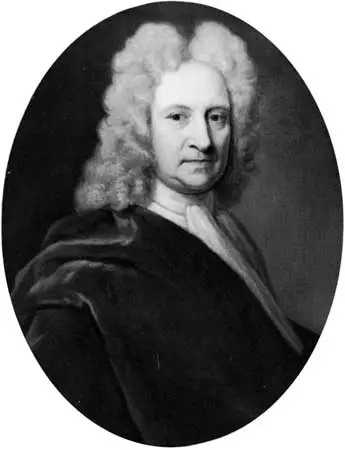
Edmond Halley
Edmond Halley, proposed another hypothesis that stated that the globe is made of a number of spherical balls that surrounded one over the other. He also stated that every spherical ball was rotating in a particular direction.
Advancements in the Properties of Electromagnetism
In 1820, scientist Hans Christian Oersted wanted to show his students about the heating of an electric coil and demonstrated some of his experiments on magnetic property. He mounted a long needle over a wooden stand for his experiment. He was surprised to the greatest extent when he noticed that every time when he turned on the switch, the needle moved. He winded up that day’s experiments and kept working on finding the newest phenomenon which disturbed him.

Hans Christian Oersted
After days and days of work, Hans Christian Oersted could not come to a conclusion about why the needle moved. He noticed that the needle did not have any kind of interaction with the wire as it neither gets attracted towards it nor gets repelled away from it. Hence, after a period of research, he published a paper on his work without explaining the reason why it happened.
The experiment by Oersted was repeated by Andre Marie Ampere of France. She thought that if an electrical current on a wire can stimulate magnetic property, then it must be capable of synthesizing the same property in another wire too. She then made a series of experiments with parallel and anti parallel current flowing in two wires. She then observed that wires with parallel currents attract each other and the wires with anti parallel current repel away from each other.
She then concluded with her well- explained experiments that electricity was governed by two set of forces, electric force and magnetic force.
Though, Hans Christian Oersted and Andre Marie Ampere worked on experiments that disclosed the secrets of the electromagnetic property, there are many other great people involved in this invention. There is no one in particular, who was the major cause for the invention of this phenomenon.

Andre Marie Ampere
Right from the ancient times, even a common man was aware of the fact that when fur was rubbed on something, the particles get stick to the fur. This was not deeply experimented, but the clues for electromagnetism weeded during the earlier days itself.
The people who made studies on the electromagnetic property in those days include William Gilbert, Robert Boyle, C.F.du.Fay, Stephen Grey and Otto Von Guericke.
After the proper experiments by Hans Christian Oersted and Andre Marie Ampere, a few other people worked on this property in the nineteenth century. James Clerk Maxwell, Michael Faraday, Nikola Tesla, Thomas Alva Edison, George Westinghouse, Ernst Werner von Siemens, Alexander Graham Bell and Lord Kelvin are the others who made several important contributions towards the advancements on the properties of electromagnetism.
Recent Studies on Electromagnetism
With all the experiments carried out by the earlier mentioned people, it was believed that electromagnetism has a wide variety of applications. The luxury and the comfort that we enjoy today is a result of the work of a number of scientists and researchers. There is no one in particular who can be remarked as the Father of electromagnetism, but the inquisitive nature and the curiosity of a few brains led to the invention of this interesting property.
Joseph Priestly, who discovered the oxygen and other gases found in the atmosphere, had also made some notable contributions toward this innovative invention.
Monday, 3 June 2013
The story of Fibonacci series
All of you must have heard about the term “Fibonacci series”. Many of you (including me) might have written programs in different programming languages to generate a “Fibonacci series”. It is quite interesting to see that tutorials of all programming languages would contain a problem to generate fibonacci series upto “N” terms. Well, this made me a little curious. What is so important with this particular series? In mathematics, there may be a 100 or 1000 types of series – but why “Fibonacci” is learned by everyone?

Leonardo of Pisa
Now let’s get into the story. Fibonacci series is – 0,1,1,2,3,5,8,13,21,34,55,89,144,233,377… it moves to infinity. This series is named after the famous Italian mathematician - Leonardo of Pisa (aka Fibonacci). His period of life is assumed to be in between 1175 AD to 1250 AD. Leonardo’s father was a merchant in the port of Pisa. As a young boy, Leonardo traveled extensively with his father across the mediterranean sea shores. The Mediterranean sea (known in latin as “middle of land”) connects together 3 continents – Africa, Europe and Asia. Trade had been happening between major ports of all these continents and Leonardo actively involved in these trades with his father. Leonardo and his people who belonged to Europe, was using Roman numerals for trade calculations. The Europeans were completely unaware of the “Hindu Arabic” system which was used by Arab traders in Asian/African countries (this is the presently known decimal number system ). The basic difference between a Roman numeral system and “Hindu Arabic system” is shown below.
Roman Numerals has no symbol for zero. They dont have a symbol for 2,3,4,7,8 and 9. Instead they were depending upon the symbols for 1,5,10,50,100,500 and 1000 for their calculations. See the table below.
I
|
1
|
V
|
5
|
X
|
10
|
L
|
50
|
C
|
100
|
D
|
500
|
M
|
1000
|
So to represent 1910 – Romans would write – MDCCCCX. The interesting thing is you can write this in any order – means – CCCCDMX – would also read 1910. This is because the number is read finally by calculating M+D+C+C+C+C+X. It was very difficult to add or subtract two numbers using the roman number system. If you are interested in knowing how calculations are performed in roman system – follow this link – Roman numeral calculations.
The “Hindu Arabic” system was quiet different. They only had symbols for numbers from 0 to 9. This is our decimal number system. Higher numbers were represented in this system by repeated addition or repeated subtraction. This means 1910 in “Hindu Arabic” is 1000 one times + 100 nine times + 10 one time + 1 zero times.
Note: History says that this system originated in India. Arabs learned this from Indians (as part of their Eastern trade) and they called this “Hindu Numerals”. Later westerns learned this from Arabs and they called this system “Arab Numerals”
Leonardo learned about various methods used by merchants for calculations and he found the “Hindu-Arabic” system very easy and convenient to perform mathematical calculations compared to the cumbersome “Roman numerals” method. He later introduced this “Hindu Arabic” system in Europe and he documented the system and how to make calculations using this system in a book called “Liber Abaci” (1202 AD). This “new” system later influenced many European mathematicians.
The Fibonacci series…
This series is invented by Leonardo in an attempt to solve a real life problem. A rabbit farmer wanted to know how many rabbits he can grew in a year from one pair. The problem is quiet an interesting one. A pair of rabbits bear another new pair in a single month. This new born pairs can bear another pair after the first month.
Now he explains the problem as:-
Because the above written pair in the first month bore, you will double it; there will be two pairs in one month.
One of these, namely the first, bears in the second montth, and thus there are in the second month 3 pairs;
of these in one month two are pregnant and in the third month 2 pairs of rabbits are born, and thus there are 5 pairs in the month;
…
there will be 144 pairs in this [the tenth] month;
to these are added again the 89 pairs that are born in the eleventh month; there will be 233 pairs in this month.
To these are still added the 144 pairs that are born in the last month; there will be 377 pairs, and this many pairs are produced from the abovewritten pair in the mentioned place at the end of the one year.
So that is the real origin of Fibonacci series. This series is invented in an attempt to solve a real life business problem of – “how many rabbits can be made from a single pair in an year” .
I said, “business problem” because Leonardo was basically involved in trade and this problem of rabbits might have raised to him by one of his business contact!
Other interesting facts:-
After the eighth sequence of calculations, there are constant relationships that can be derived from the series. For example, if you divide the former number by the latter, it yields 0.618.
- 34/55 is approx = 0.618
- 55/89 is approx = 0.618
And, if you divide the latter number by the former, it gives 1.618.
- 144/89 = 1.6179 approximately 1.618
- 233/144 = 1.6180 approximately 1.618
Note: The series is named “Fibonacci series” by French Mathematician Edouard Lucas. He invented many other applications of the series and also discovered another series which is closely related to Fibonacci series, known as the Lucas numbers (2, 1, 3, 4, 7, 11, 18, 29, 47)
Sunday, 14 April 2013
You Can Hijack Airplane With An Android App!
| If you thought hijacking airplanes was an uphill task, think again! If you so wish to do it, there's an app for it, that makes the task easier than you expect. All you need is an Android smartphone and get the app dowloaded and make the most of the airplane computer systems. Hugo Teso, an IT expert and trained commercial pilot revealed the details of the app while talking at the Hack In The Box Conference in Amsterdam. Teso has an extensive knowledge and experience in both fields. He revealed that the modern day air planes are susceptible to malicious attacks, which all the hackers to take 'complete control' of aircrafts with their mobile device. |  |
Teso has developed a software that is capable of getting installed on the on-board computer (SIMON). He has also developed an Android app along with it that allows hackers to have control on various aspects of the plane (PlaneSploit).
Teso took advantage of two airplane security technologies including the Automatic Dependent Surveillance-Broadcast (ADS-B) and the Aircraft Communication Addressing and Reporting System (ACARS). Both the technologies are “highly susceptible to a number of passive and active attacks.” According to Net Security, here's what these technologies are responsible for:
The Automatic Dependent Surveillance-Broadcast (ADS-B) is responsible for sending information about each aircraft (including identification, current position, altitude, and so on) via an on-board transmitter to air traffic controllers. ADB-S allows aircrafts to receive flight, weather and traffic information about other aircrafts in their vicinity while flying.
The other technology called the Aircraft Communications Addressing and Reporting System (ACARS) is used to exchange messages between aircrafts and air traffic controllers via radio or satellite. It also allows automatic delivery of information about each flight phase to the latter.
SIMON framework works in a virtual environment, which is created with software and hardware products to simulate real life scenarios. It is apparently untraceable after it is deployed and enables the hacker to upload other software to the “Flight Management System [FMS] (computer unit + control display unit)” on a plane. Hacker can then control the aircraft remotely with help of the Android app.
After SIMON is installed in FMS, it is PlaneSploit that does the job. The app comes with a clean and simple interface. The steps that you have to follow include:
Please go here: It takes the user to choose locations on the map and change the route of the flight.
Define area: It sets detailed filters related to the airplane.
Visit ground: Crash the airplane.
Kiss off: Remove itself from the system.
Be punckish: It alerts the pilots that something is seriously wrong. Alarms start buzzing and lights start flashing.
Friday, 1 March 2013
The Collective Evolution II: The Human Experience (Documentary)
'The Collective Evolution II: The Human
Experience' is a documentary focused on showing each of the dimensions to the
experience we call life. Its intention is to provide the viewer with the tools
and understanding needed to step out of current limitations and instead
experience the infinite potentiality we are all capable of. The documentary
concludes by addressing the shift in consciousness that has already begun and continues to
intensify on the planet.
“The two most important days in your life are the day you are born and the day you find out why.” -Mark Twain

“We are the facilitators of our own creative evolution.” -Bill Hicks
FLUORIDE: The Hard to
Swallow Truth is a short documentary that looks at the initial theories behind
the effectiveness of fluoride and where it originated. It goes on to show the
lack of science behind the use of Fluoride and reveals Fluoride as a toxic waste
substance that is being pumped into our drinking water. The documentary will
conclude by delivering the "hard to swallow truth" of fluoride which pertains to
why it is actually used.
“In point of fact, fluoride causes more human cancer death, and causes it faster than any other chemical.” -Dr. Dean Burk, Congressional Record 21 July 1976

July 2012 NEWS: Harvard Study Finds Fluoride Lowers IQ - Published in Federal Govt Journal
“In point of fact, fluoride causes more human cancer death, and causes it faster than any other chemical.” -Dr. Dean Burk, Congressional Record 21 July 1976

“When you have power you don't have to tell the truth. That's a rule that's been working in this world for generations. And there are a great many people who don't tell the truth when they are in power in administrative positions.” -Dr. Dean Burk, Ph.D, 34 years at the National Cancer Institute.
Subscribe to:
Posts (Atom)